
exhibition home page
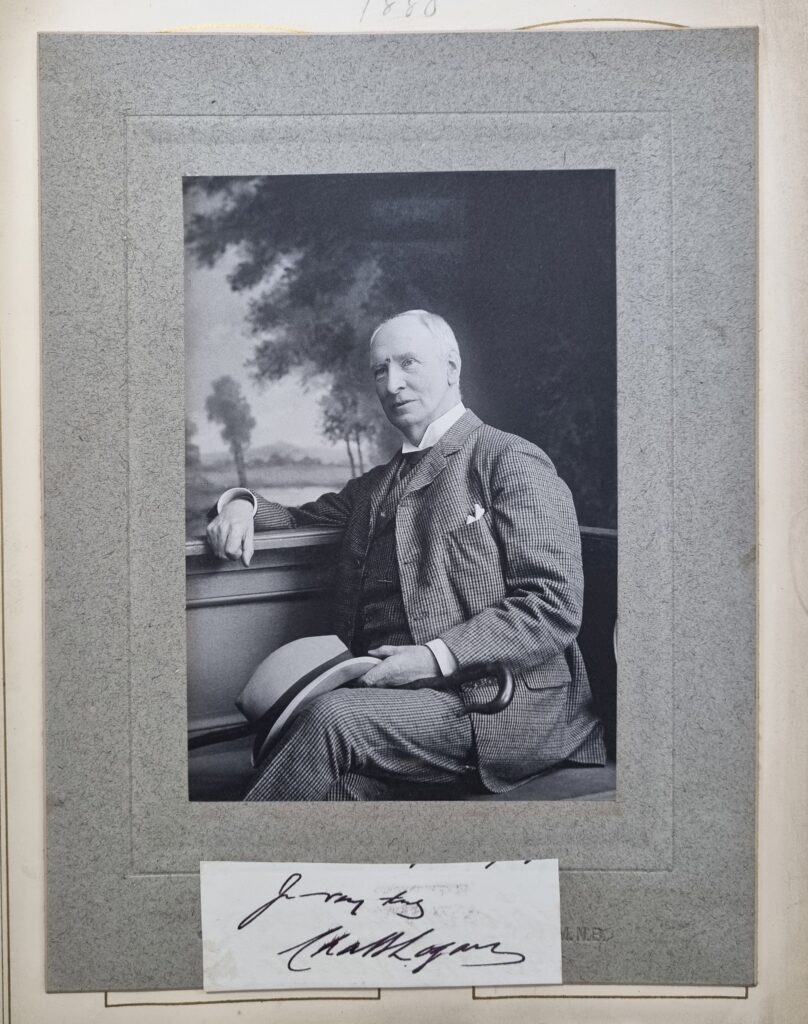
Because the WS Society’s officers so often conducted their business from the offices of their law firms, it is relatively unusual for the Society’s archive to contain significant records of their service outwith the Sederunt Book and Commissioners’ Minutes. An important if partial exception to that rule is a collection of letters and papers belonging to Deputy Keeper Sir Charles Logan whose period in office spanned the years from 1887 to 1905. Over the course of 2025 these were mapped and described in a project conducted by the archivist Vilde Bentsen and these records will be added to the WS Society Archives Catalogue in due course.
Logan’s period in office was a highly significant one, covering the greater part of the Society’s late Victorian golden age of growth and prosperity. Despite the removal of the last of the Society’s ancient privileges (if not its burdens) in the legal reforms of the 1870s, Logan’s Deputy Keepership saw the Society at a new height of respect and prestige. Writers to the Signet were deeply involved in the life of the country, the Signet Library was once again a centre for international scholarship, and in 1902-4 the West Wing extension was built, a structure that with its steel structure, book lift and electric lighting, was quietly but firmly well ahead of its time.
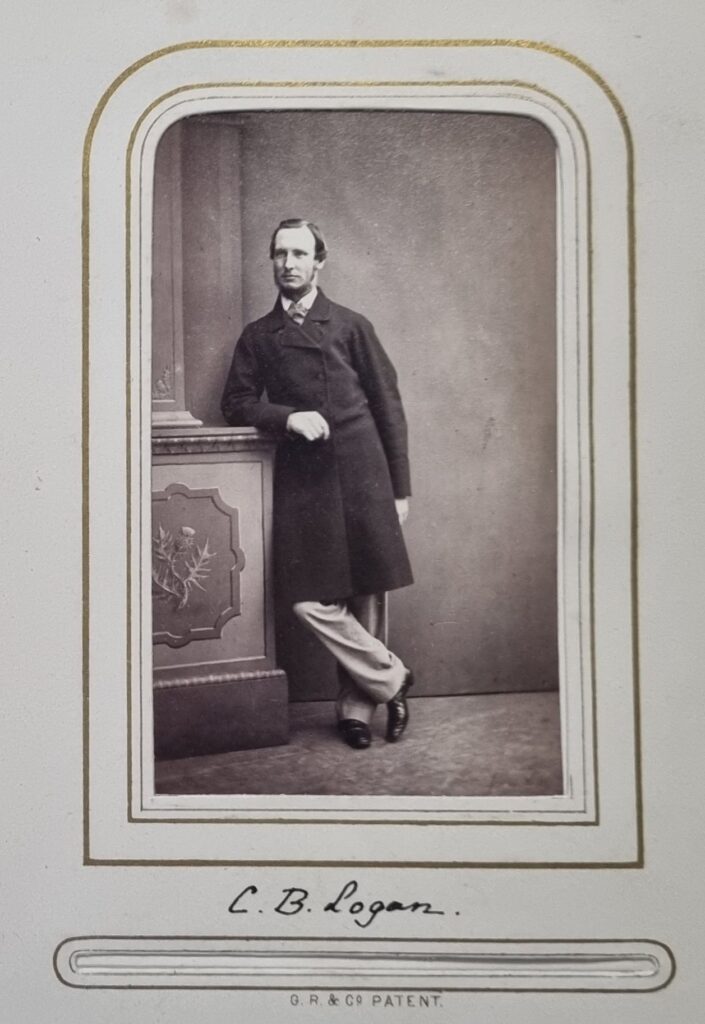
Born the son of Writer to the Signet John Logan in 1837, Charles came to the Deputy Keepership almost thirty years after taking his oath and having already served a term as Fiscal to the Society. Early in his WS career he had volunteered for the WS Volunteer Rifles and his youthful portrait is in the remarkable album of photographs of members of the Rifles compiled at the time.
The role of Deputy Keeper has always called for considerable personal skills and although much of Logan’s correspondence is businesslike in character, the warmth of his relationships with his colleagues is much in evidence. His long relationship with John Milligan WS (whose son James apprenticed with Logan) is much in evidence here, as is his friendship with Treasurer John Cowan (who would end his life the Father of the Society).
But it is in the letters from the Librarian, Thomas Graves Law, that Logan’s character is best called forth. Law was in the habit of destroying his correspondence every six months, and surviving letters are therefore few and far between. For the last ten years of his life before his death in 1904 Law spent much time in great pain from illness, which he bore with patience and courage. His letters to Logan show both his determination not to allow this misfortune to hinder his Stakhanovite approach to his work and the great well of support and appreciation that came his way from the DKS and the wider Society during his period of difficulty.
Logan’s period of office saw the arrival of new technology that, properly harnessed, had the possibility of transforming the practice of the law in a positive way. This was the period that introduced the typewriter, and Logan’s correspondence discusses the possibility of allowing official documents (once obliged to take handwritten form, then printed) to be typewritten, or copies to be produced photographically. The telephone arrived during the final period of Logan’s tenure (belatedly: the SSC had adopted it soon after the service arrived in Edinburgh in the 1880s) and by the time of Logan’s retirement the Library had acquired an early type of carbon copier.
Sometimes it was the ancient traditions that caused the greatest difficulties, however. During the Ardlamont Trial of 1893, in which Alfred Monson was accused of murdering his pupil, Windsor Dudley Cecil Hambrough, an enthusiastic takeup for the WS Society’s ancient rights to seats in the Supreme Court collided with an equally enthusiastic demand for access to the public seats and the unseemly chaos that ensued called on all of Logan’s powers of diplomacy to unravel.
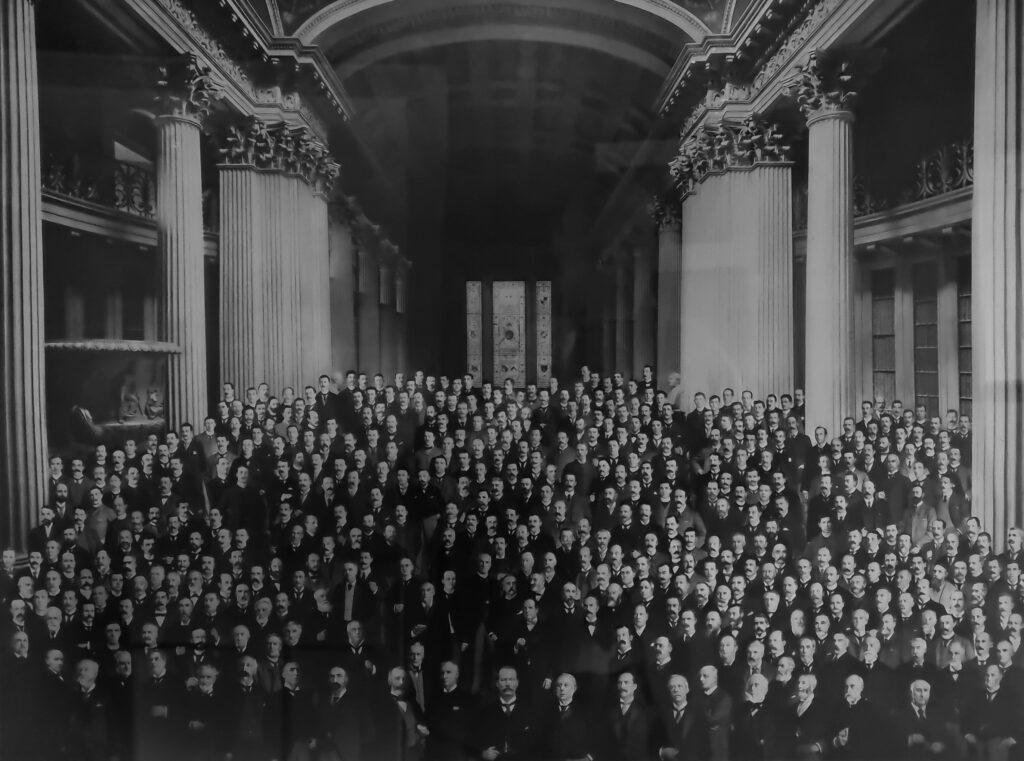
There was also comedy. In 1900, it was decided to create a group photograph of the entire membership, and John Milligan wrote to the Society requesting that they present themselves at the Barclay Brothers’ studio on Princes Street to have their likeness taken. But one doesn’t just tell Writers to the Signet what to do. George Campell WS protested that the whole thing was a speculation on the Barclays’ part, “an objectionable practice”: H. Hamilton Crichton WS made his point more succinctly – “I have never to my knowledge, been photographed and must decline including my appearance in the proposed photo.” However, the Duke of Montrose, in his role as Keeper of the Signet, subjected himself to the ordeal and it would appear that his example compelled most, if not all, of the membership to fall into line behind him.