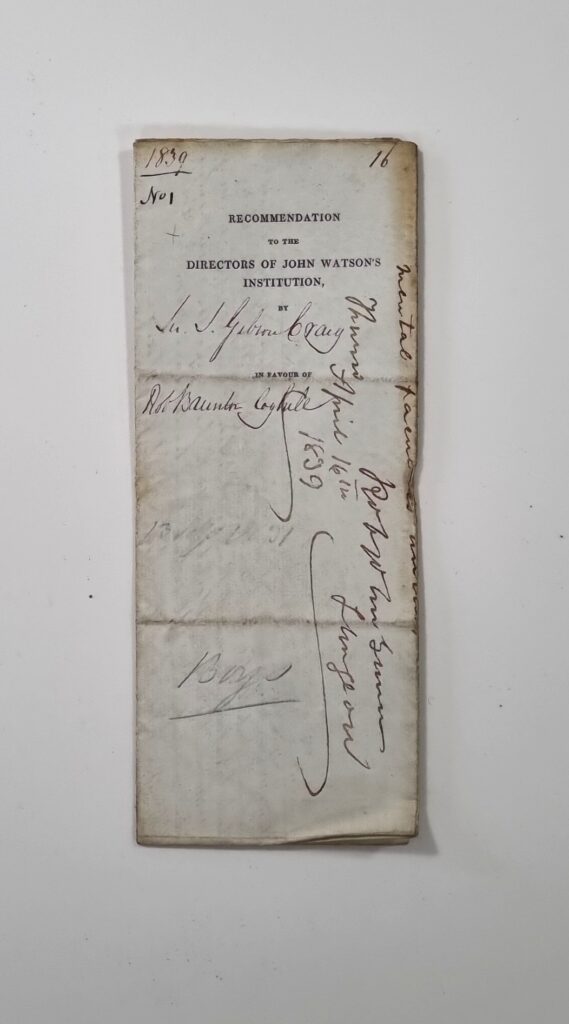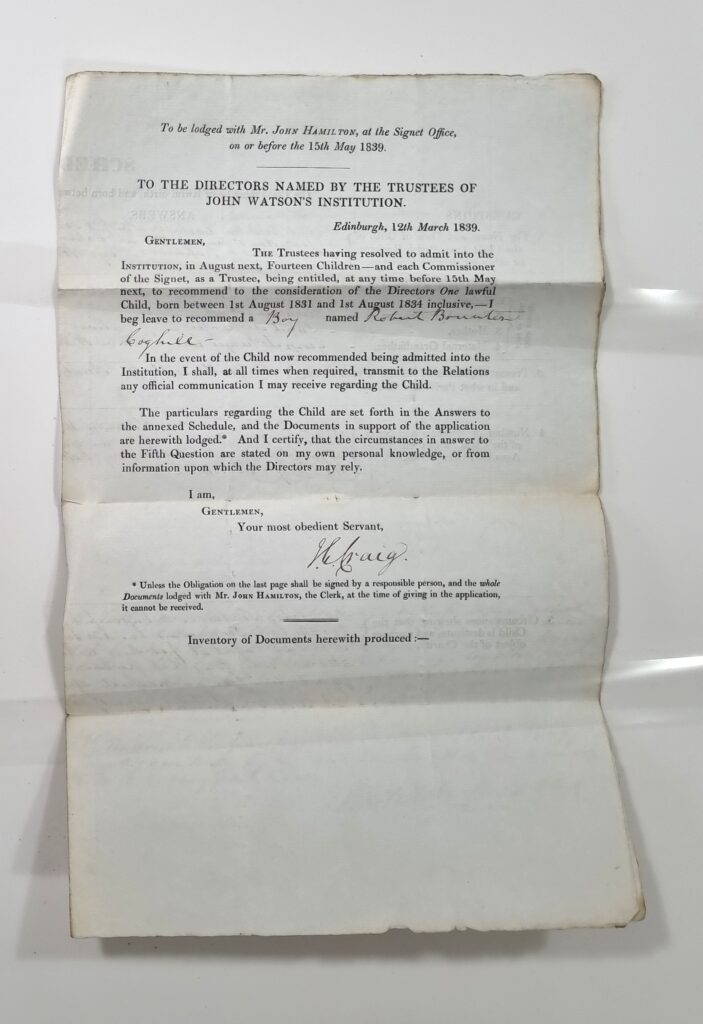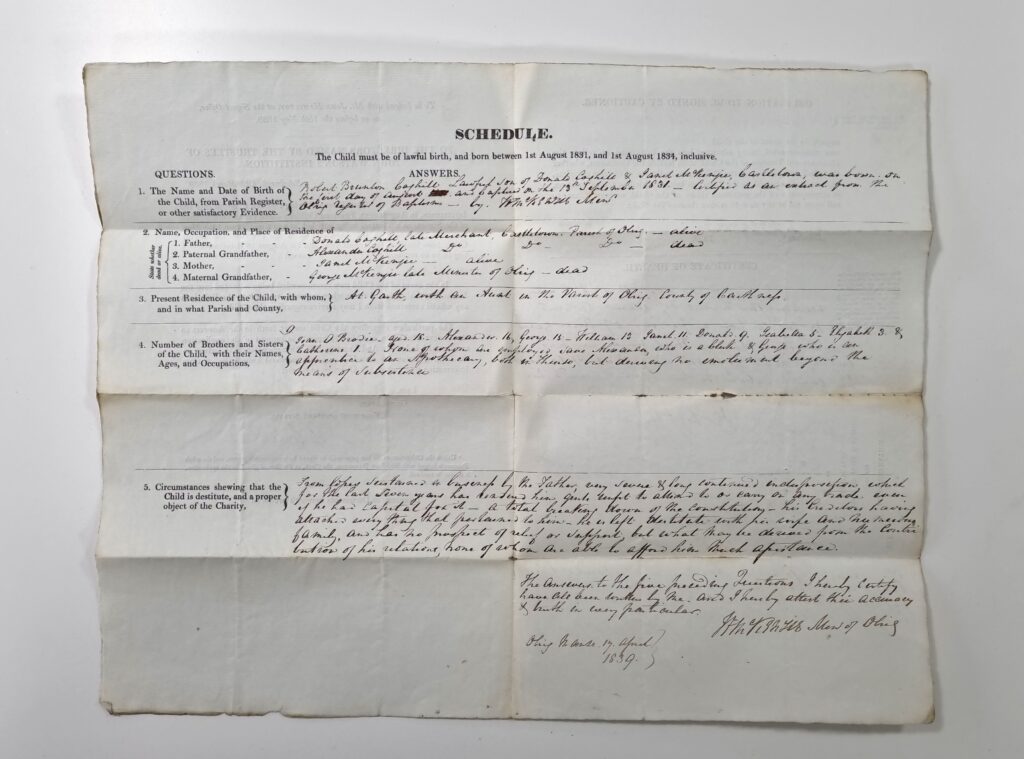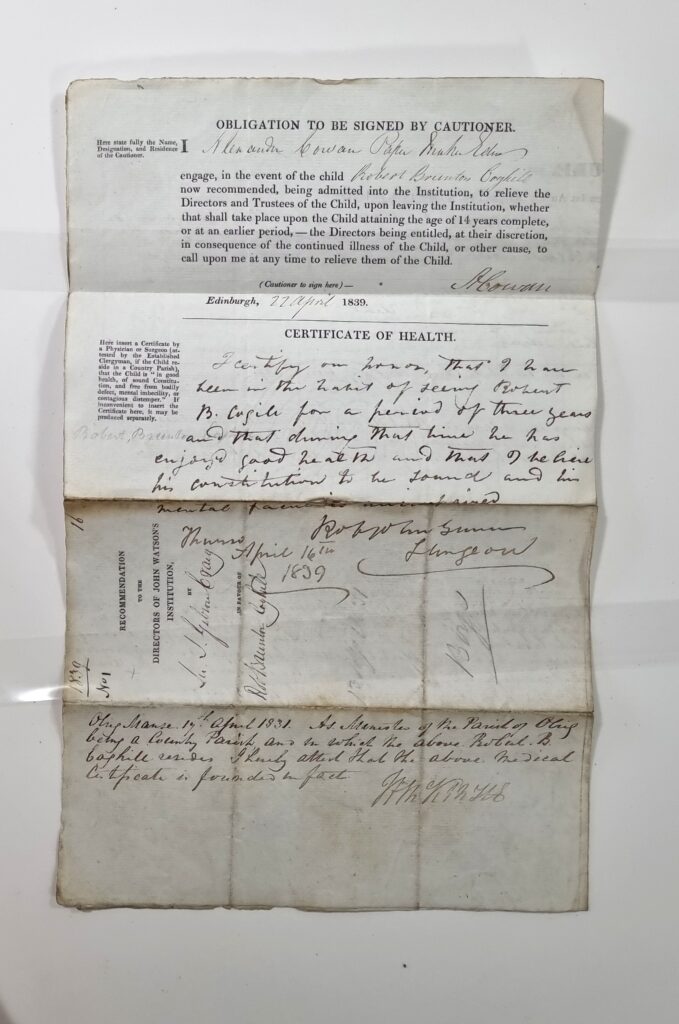

Robert Brunton Coghill was born on 1 August 1831 in Castletown, Olrig, Caithness. His maternal grandfather George McKenzie had been the Minister of Olrig. Both of his parents were alive at the time of his application but his father Donald, a merchant, was unable to support his family because of a long-term indisposition. Robert had nine siblings ranging in age from his sister Jean, 18, to his sister Catherine, 1. His brother Alexander, 16, was a clerk, and his brother George, 15, was an apprentice apothecary. Both boys were in Thurso, ‘but drawing no emolument beyond the means of Subsistence’. Robert was living with an aunt in Garth.
Circumstances shewing that the Child is destitute, and a proper object of the Charity, }
From losses Sustained in business by the Father, very severe & long continued indisposition which for the last Seven years has rendered him quite unfit to attend to or carry on any trade even if he had Capital for it – a total breaking down of the constitution – his Creditors having attached every thing that pertained to him – he is left destitute with his wife and numerous family, and has no prospect of relief or Support, but what may be derived from the Contribution of his relatives, none of whom are able to afford him Much Assistance.
The Answers to the five preceding Questions I hereby Certify to have all been written by Me. And I hereby attest their Accuracy & truth in every particular.
William Mackenzie
Olrig Manse, 17. April 1839
Robert was admitted to John Watson’s Institution in 1839. The 1851 Census found him back in Garth with his aunt and working on her farm.
Robert sailed to Australia in the 1860s. In 1869, he married Flora Kennedy in New Zealand. The couple settled in Dunedin. They had three children: Robert Brunton (1869-1922), who became a notable artist, Jessie Isabella Jane (1870-1950), and George (1872-1925).
Robert died at Dunedin City, Otago, New Zealand, on 5 December 1902.
application